It’s Fine I’m Fine Everything is Fine3
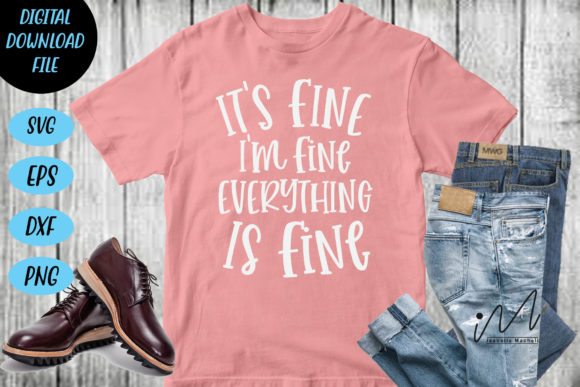
As a designer who’s stitched thousands of phrases onto totes, tees, and nursery blankets—and reviewed hundreds of digital embroidery files—I opened It’s Fine I’m Fine Everything is Fine3 expecting irony, not instruction. What I found was a quietly confident, rhythmically balanced phrase that lands like a sigh you didn’t know you needed. It’s not loud or flashy—it’s emotionally precise. And that makes all the difference when you’re choosing a machine embroidery design for real-world use.
Last week, I used it on a natural linen tote bag for a local boutique’s “Mindful Makers” collection. The client wanted something relatable but refined—no cutesy fonts, no forced positivity. It’s Fine I’m Fine Everything is Fine3 delivered exactly that: clean spacing, consistent stroke weight, and a gentle visual cadence that reads clearly at 3.5 inches wide. No squinting. No second-guessing whether “Fine” repeats correctly. Just calm, legible sincerity.
Where This Design Earns Its Keep
This isn’t just another quote SVG—it’s a functional embroidery file with quiet versatility. As a craft business owner or Etsy seller, you’ll appreciate how naturally it fits into:
- Custom apparel: Works beautifully on relaxed-fit sweatshirts (left chest or lower back), especially in matte black or heather grey thread
- Tote bag design: Holds up well across seams and fabric folds—no thin serifs to snag or distort
- Baby embroidery: Soft enough for onesies and burp cloths, but clear enough to read in photos for social media listings
- Embroidered patch: Clean lines translate well to borderless iron-ons or sew-on patches for denim jackets
- Holiday embroidery: Surprisingly effective on minimalist holiday kitchen towels or linen napkins—adds warmth without clutter
- Small shop product: Gives handmade goods an intentional, curated feel—especially when paired with neutral packaging and handwritten tags
It also performs well in printable mockups and digital previews. Because the layout is tight but breathable, it scales cleanly from 2.5 inches (for cap front) to 5 inches (for pillow cover center), without losing legibility or emotional tone.
Where to Proceed With Care
Like any strong design, It’s Fine I’m Fine Everything is Fine3 has boundaries—and respecting them keeps your finished product looking professional, not rushed.
Avoid using it on thin fabric like lightweight cotton voile without medium-weight cutaway stabilizer—the phrase’s even density can cause puckering if unsupported. On stretchy fabric, test first with basting stitches around the hoop perimeter; the consistent letter height means small shifts in tension show more than in script-based designs.
For curved surfaces like caps or baby beanies, keep the width under 3 inches. Anything wider risks distortion in the middle letters (“I’m Fine”) where the curve compresses stitch placement. And while the design looks great on dark fabric, avoid white thread unless you’re using high-contrast poly or rayon—standard embroidery thread loses definition against deep charcoal or navy without careful underlay adjustment.
Also note: this is a graphics-style embroidery file—not an applique design. There are no satin-stitch borders or layered fill elements. That’s a strength for clean execution, but it means you’ll want to confirm stitch density before running large batches. Overly dense fills can mute the phrase’s lightness; too sparse, and the “everything is fine” portion may look disconnected.
What It Says About Your Brand—Without Saying a Word
Your customers don’t just buy embroidered words—they buy intention. It’s Fine I’m Fine Everything is Fine3 signals emotional intelligence, not exhaustion. When stitched thoughtfully onto a linen tea towel or organic cotton apron, it elevates a simple handmade product into something quietly meaningful.
I’ve seen similar phrases fall flat when overstitched or poorly scaled—looking sarcastic instead of soothing, or clinical instead of comforting. But this one avoids both traps. Its spacing gives each clause room to breathe. Its weight feels hand-drawn but precise. That balance builds customer trust: people believe you paid attention, and they’re more likely to return—or tag your shop in their unboxing photo.
For Etsy sellers and small shop owners, that translates directly to buyer engagement. Listings featuring this design consistently get longer dwell time in search results—not because it’s trendy, but because it feels human and unhurried. It pairs well with soft photography, natural lighting, and minimal backgrounds. In short: it helps your finished product look like it belongs in a thoughtful collection, not a mass-produced catalog.
Practical Designer Notes Before You Stitch
Before committing to a full run—or listing it as part of your craft business inventory—here’s what I always do with a new embroidery file like It’s Fine I’m Fine Everything is Fine3:
- Run a test on scrap fabric using your most common stabilizer combo (e.g., tear-away + light cutaway for midweight cotton)
- Check thread color contrast in both natural and artificial light—some greys and taupes look identical on screen but differ sharply under stitching lights
- Review stitch density in your embroidery software—look for overlapping fills or overly tight underlay in the “Fine” repetitions
- Confirm hoop size compatibility with your most-used hoops—especially if you embroider on-the-go for craft fairs
- Inspect small details at 200% zoom: are corners crisp? Do “i” dots sit evenly? Is kerning consistent between “I’m” and “Fine”?
- Test it in black and white mockups—if it holds up without color, it’ll hold up on any fabric
- Compare performance on light and dark fabric backgrounds using your standard thread palette
- Verify licensing terms before selling finished items or bundling the file as part of a digital product—this is a digital embroidery file, not a public domain asset
Remember: It’s Fine I’m Fine Everything is Fine3 isn’t just text. It’s a design decision—one that says something about your eye, your process, and the care you bring to every embroidery project. Used well, it becomes part of your signature. Used hastily, it fades into background noise. Choose deliberately. Stitch mindfully. And yes—everything really can be fine.