Future Registered Nurse
A Designer’s First Look: Clean, Confident, and Quietly Joyful
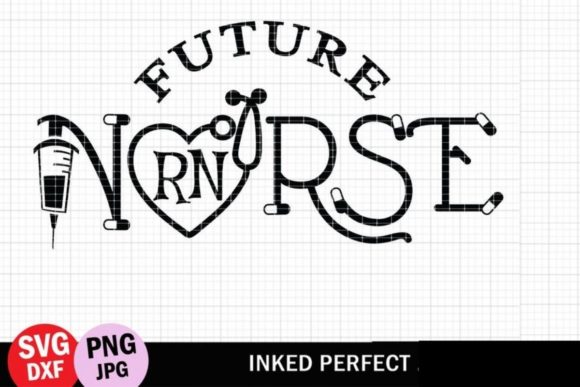
When I opened Future Registered Nurse, I didn’t see a generic “nursing” cliché — no stethoscopes, no red crosses, no cartoon syringes. What landed was a calm, centered phrase in clean, modern lettering: confident spacing, balanced weight, and just enough personality to feel warm without tipping into kitsch. It’s not shouting — it’s smiling. That tone matters deeply when you’re stitching something meant to be worn, gifted, or sold. As a designer who’s reviewed hundreds of embroidery files for craft businesses and Etsy sellers, I immediately asked: *Where does this live best? And where might it stumble?*
Real-World Use Case: A Custom Embroidered Tote for Graduation Day
Last week, I stitched Future Registered Nurse onto a natural canvas tote for a nursing student’s graduation gift. The fabric was medium-weight, tightly woven, and slightly textured — ideal for crisp satin-stitched letters. I used medium tear-away stabilizer underneath and a light cut-away on the back for structure. The result? Sharp, legible, and emotionally resonant. Her family recognized the pride in it instantly — not just as a credential, but as a quiet milestone. That’s the power of restraint: the design doesn’t need illustration to carry meaning. It works because it trusts the wearer — and the viewer — to understand the weight behind those four words.
Where It Shines (and Why)
- Custom apparel: Works beautifully on crewneck sweatshirts, relaxed-fit tees, and lightweight denim jackets — especially when placed center-chest or upper-back. The even letter height and open spacing prevent crowding at seams or curves.
- Tote bag design & kitchen towels: The clean layout reads well at 3.5–4.5 inches wide — large enough for visibility, small enough to avoid overwhelming the item. No fine serifs or tight kerning to vanish in fill stitch.
- Baby embroidery & nursery decor: On a soft cotton onesie or linen pillow cover, it reads as tender and hopeful — not clinical. Avoid dense fill areas near hems or necklines where stretching could distort letter shapes.
- Holiday embroidery & personalized gifts: Perfect for Christmas stockings, graduation caps, or embroidered tea towels gifted to new grad nurses. It feels handmade, not mass-produced — especially when paired with subtle thread color shifts (e.g., navy on cream, charcoal on oatmeal).
- Craft business & Etsy seller appeal: As a digital embroidery file, Future Registered Nurse is low-risk for beginners and reliable for pros. Its simplicity means fewer stitch corrections, faster hooping, and consistent results across batches — critical when fulfilling orders for boutique branding or craft fair inventory.
Where to Proceed Thoughtfully
This isn’t a one-size-fits-all embroidery file — and that’s a strength, not a flaw. Here’s where attention pays off:
- Small hoop sizes: At under 4 inches wide, it fits most 4x4 hoops comfortably — but test placement first. If your hoop has tight margins, center the design with breathing room. Don’t crowd the top or bottom baseline.
- Textured or stretchy fabric: On terry cloth towels or ribbed knit tees, use a cut-away stabilizer and reduce stitch density slightly in mockups. Running stitch outlines help define edges if fill areas soften.
- Dark fabric: White or light gray thread pops cleanly — but avoid pale yellow or peach unless you’ve tested contrast on your exact fabric. Always check a black-and-white printable mockup before finalizing thread choices.
- Curved surfaces (caps, beanies): The straight-line layout adapts well — just avoid placing it too high on the crown where distortion increases. Stick to the front panel, centered between seams.
- Frequent-wash items: Since it relies on clean satin and fill stitches (not delicate applique or tiny decorative accents), it holds up well on baby clothes or nurse scrubs — provided proper stabilizer and thread tension are used.
What This Design Says About Your Brand — Even When You’re Not There
As a small shop owner or Etsy seller, every finished product carries your reputation. Future Registered Nurse supports professionalism without stiffness. It signals care in execution — not just in stitching, but in curation. Customers notice when text is legible at arm’s length, when thread doesn’t snag on seams, and when a design feels intentional rather than decorative. That builds trust. It also elevates perceived value: a well-executed phrase like this on a linen apron or organic cotton tote reads as thoughtful, not transactional. For nursing students, new grads, or supportive families, it’s not just a gift — it’s recognition. And recognition sells.
Practical Designer Notes Before You Stitch
- Test Future Registered Nurse on scrap fabric matching your project’s weight and stretch — especially if using it for commercial embroidery or client work.
- Review stitch density in your embroidery software. If it looks overly dense in tight curves or corners, adjust fill angles or reduce density by 5–10%.
- Confirm hoop size compatibility — while it fits standard 4x4, double-check if your machine requires specific file prep (e.g., trimming excess paths in the SVG group).
- Inspect small details: the dot over the “i”, spacing between “R” and “N”, and baseline alignment. These affect readability more than you’d expect on curved or layered garments.
- Use proper stabilizer — medium tear-away for stable wovens, cut-away for knits or textured fabrics. Skipping this step risks puckering, especially in the vertical strokes of “R” and “N”.
- Check licensing before selling finished products or bundling Future Registered Nurse into digital embroidery collections. As a Graphics asset in the Crafts category, its permitted uses may vary — always verify.